Insurance
 Health Care
 Construction
 Professional Services
 Financial Services
 Mobile
 Real Estate
 Project Management
Industry: Weddings & Events
Client: PartySpace (U.S. marketplace for wedding & event venues and vendors)
Engagement: Full‑stack rebuild, migration, and ongoing product engineering
 Client Background
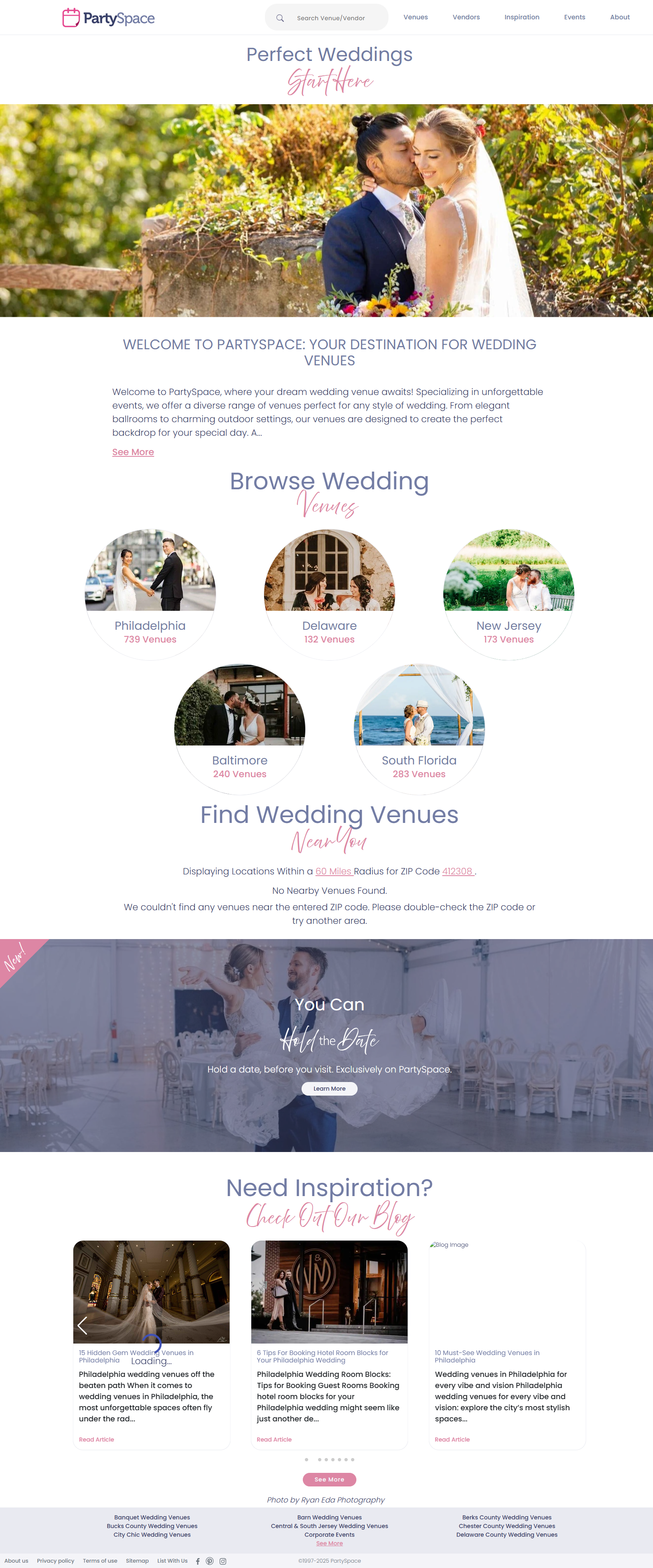
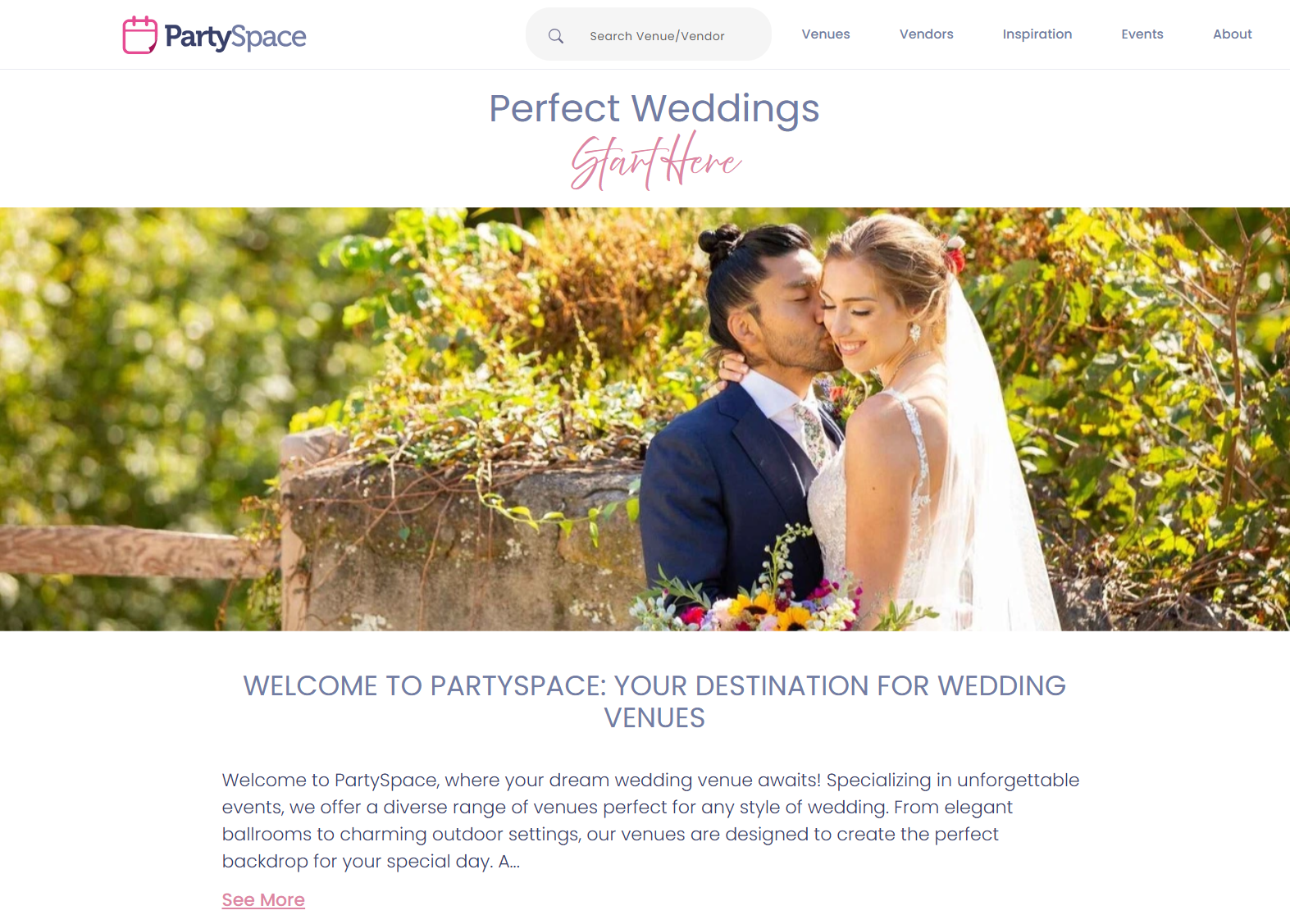
Founded in 1997, PartySpace is a go‑to marketplace for engaged couples searching for the perfect wedding venue. The platform features an exclusive availability calendar so couples can see open dates at top venues—and even place a hold online . Powerful, easy‑to‑use search lets users filter venues by location, venue type, guest capacity, and available dates . Whether planning an intimate ceremony or a grand celebration, PartySpace connects couples with venues that match their vision.
 The Challenge
- Aging, layered codebase & UX: The legacy site was built 10+ years ago. Years of incremental changes made the code brittle with inconsistent navigation and sluggish pages. Non‑responsive components affected discovery and conversions and slowed new feature delivery.
- SEO drift: Legacy URLs, duplicate content, and slow LCP hurt organic reach in competitive local markets. .
- Not mobile friendly: The legacy experience was not optimized for mobile devices, hurting usability, engagement, and SEO.
- Unreliable admin console: The back‑office tools were error‑prone and subject to frequent failures.
- Security exposure: Ad‑hoc SQL access without stored procedures left the site vulnerable to SQL injection attacks.
- Venue manager instability: The venue/owner portal for managing listings, calendars, and inquiries was unreliable.
- Limited platform operations: No automated mechanism for venue onboarding, subscription and recurring billing, content management, or SEO governance from the PartySpace admin side.
- Operational friction: Content updates, venue/vendor onboarding, and media management required heavy manual effort.
- Scalability concerns: Spikes in seasonal traffic were risky; release cycles were slow and error‑prone.
Goals
- Delight users with a modern, responsive UI and faster time‑to‑content.
- Grow organic traffic with server‑side rendering (SSR), structured data, and clean information architecture.
- Increase conversions via better search, filters (including date availability ), and streamlined inquiry/hold flows.
- Reduce ops overhead with robust admin tools, media automation, and role‑based workflows.
- Harden security & stability Harden security & stability with best‑practice data access and observability.
- Future‑proof the stack for new features and easy experimentation.
 What We Delivered
Rheal rebuilt PartySpace from the ground up on a modern JavaScript platform with an extensible backend and a refreshed, conversion‑focused UX.
Product & Experience
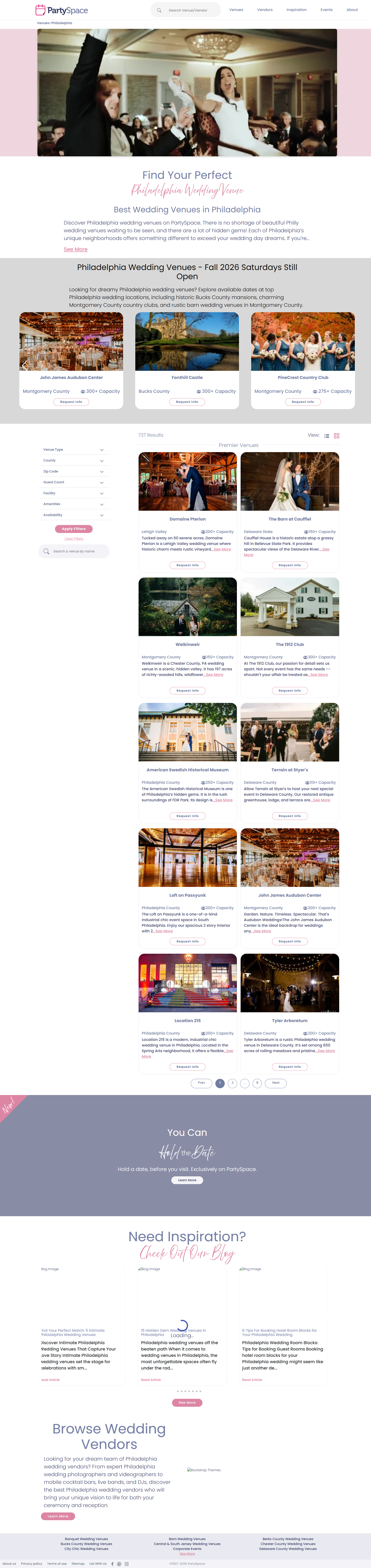
- Unified search with faceted filters (location, capacity, indoor/outdoor, price range, amenities, available dates ).
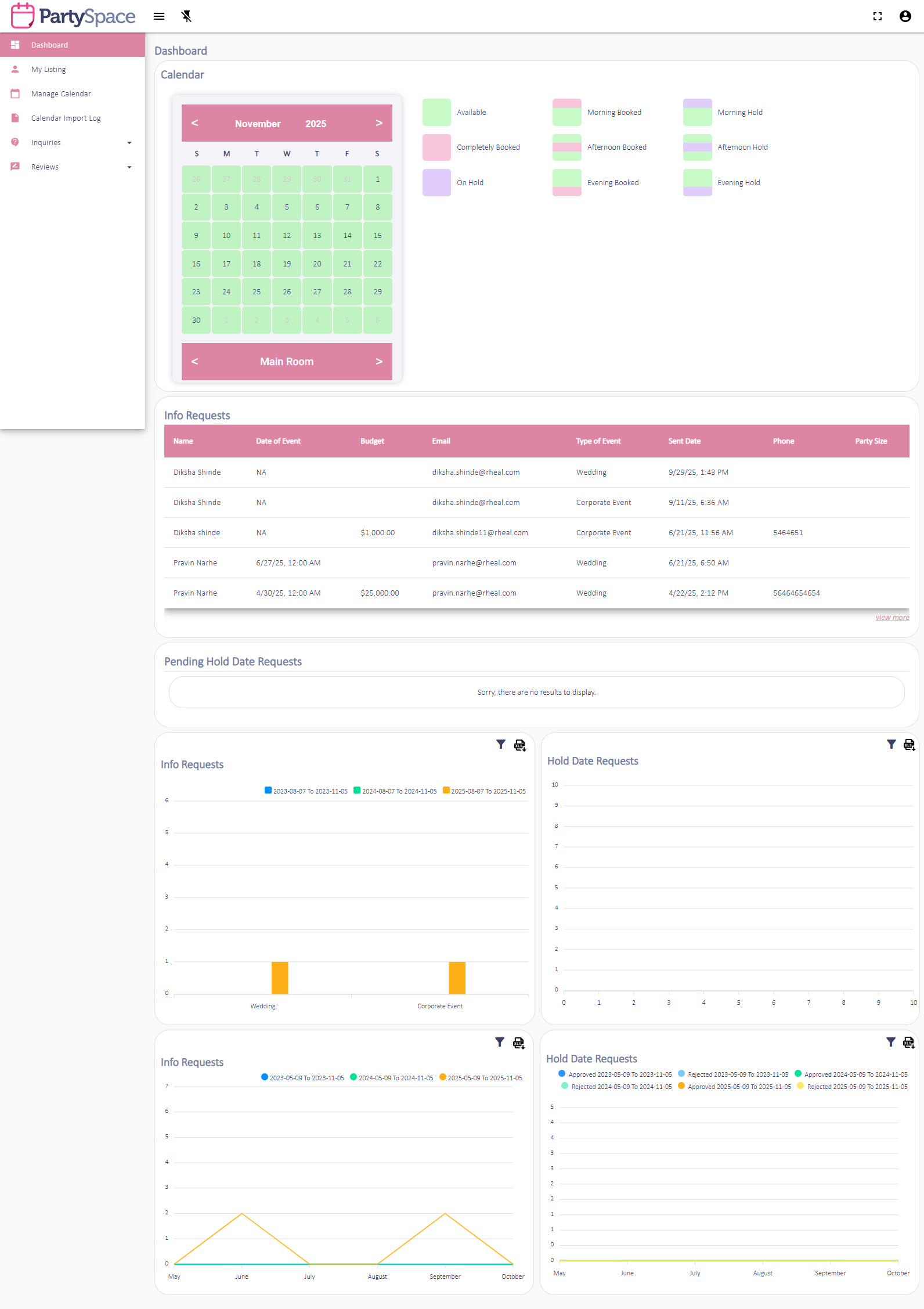
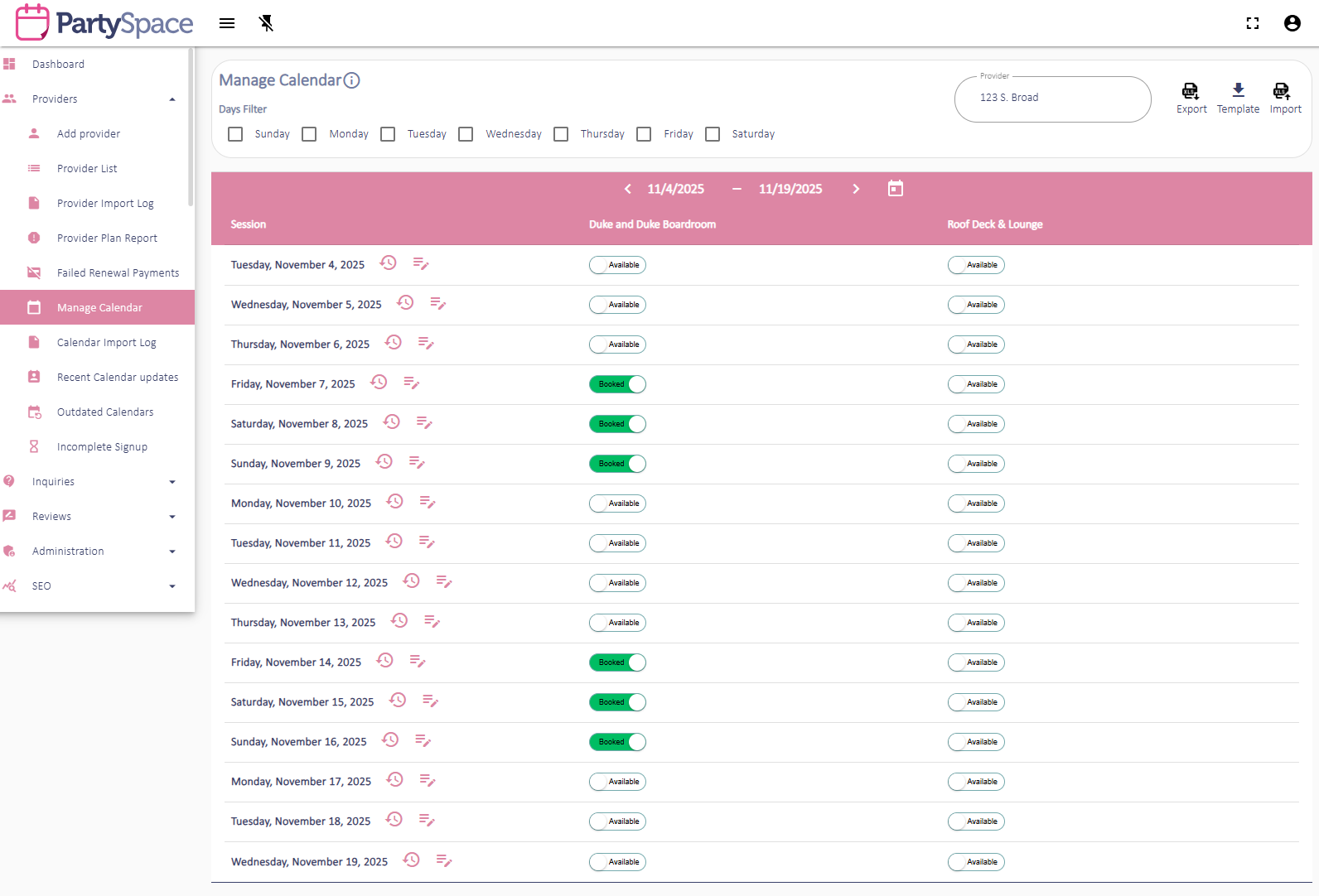
- Exclusive availability calendar integrated end‑to‑end with a Hold Date flow to capture high‑intent leads.
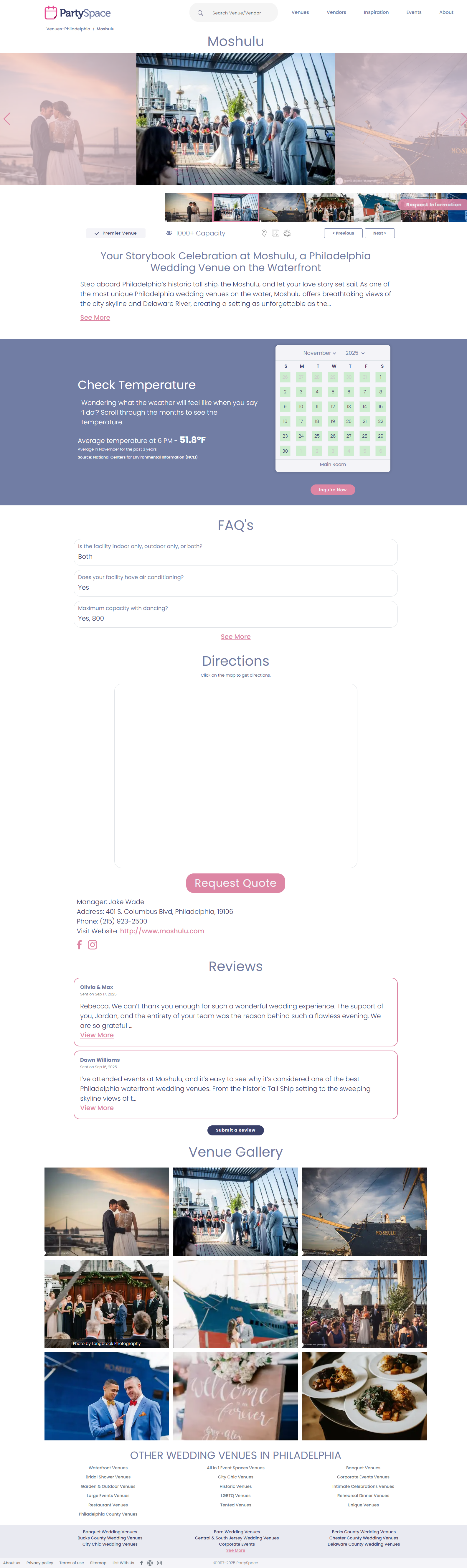
- Interactive utilities such as a monthly weather insight widget (average 6pm temps by month) and availability cues to nudge planning decisions.
- Optimized venue/vendor pages with rich media, FAQs, and prominent CTAs (Request Info / Schedule Tour).
- Mobile‑first experience with clean, accessible components.
Platform & Engineering
- SSR + hydration architecture for fast first paint and crawlable content.
- Security by design: Parameterized data access and SQL stored procedures to mitigate injection risk; input validation and rate limiting.
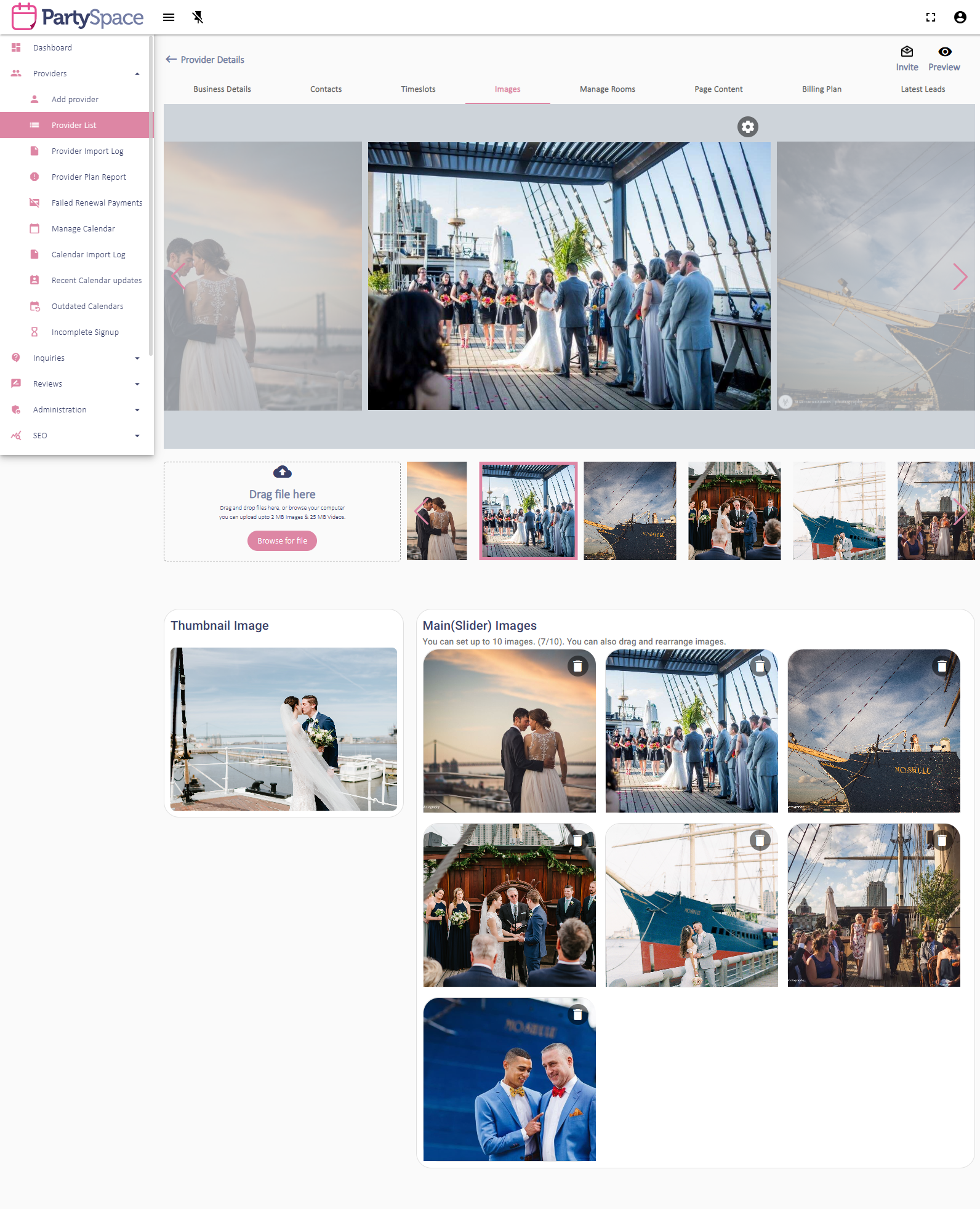
- Media pipeline for images (automatic resizing, lazy loading, modern formats).
- SEO foundations: canonicalization, JSON‑LD schema (organization/place/breadcrumbs), programmatic metadata, sitemaps/robots.
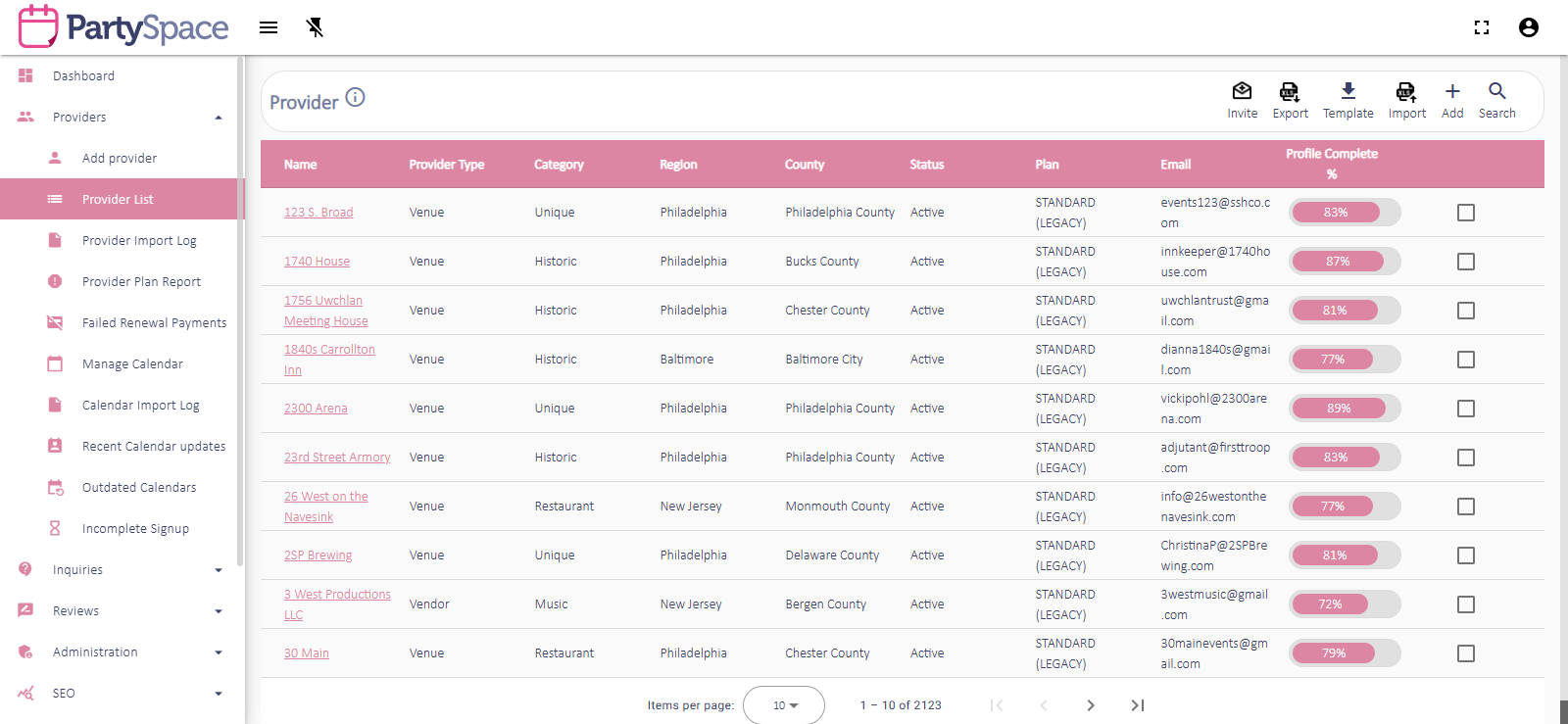
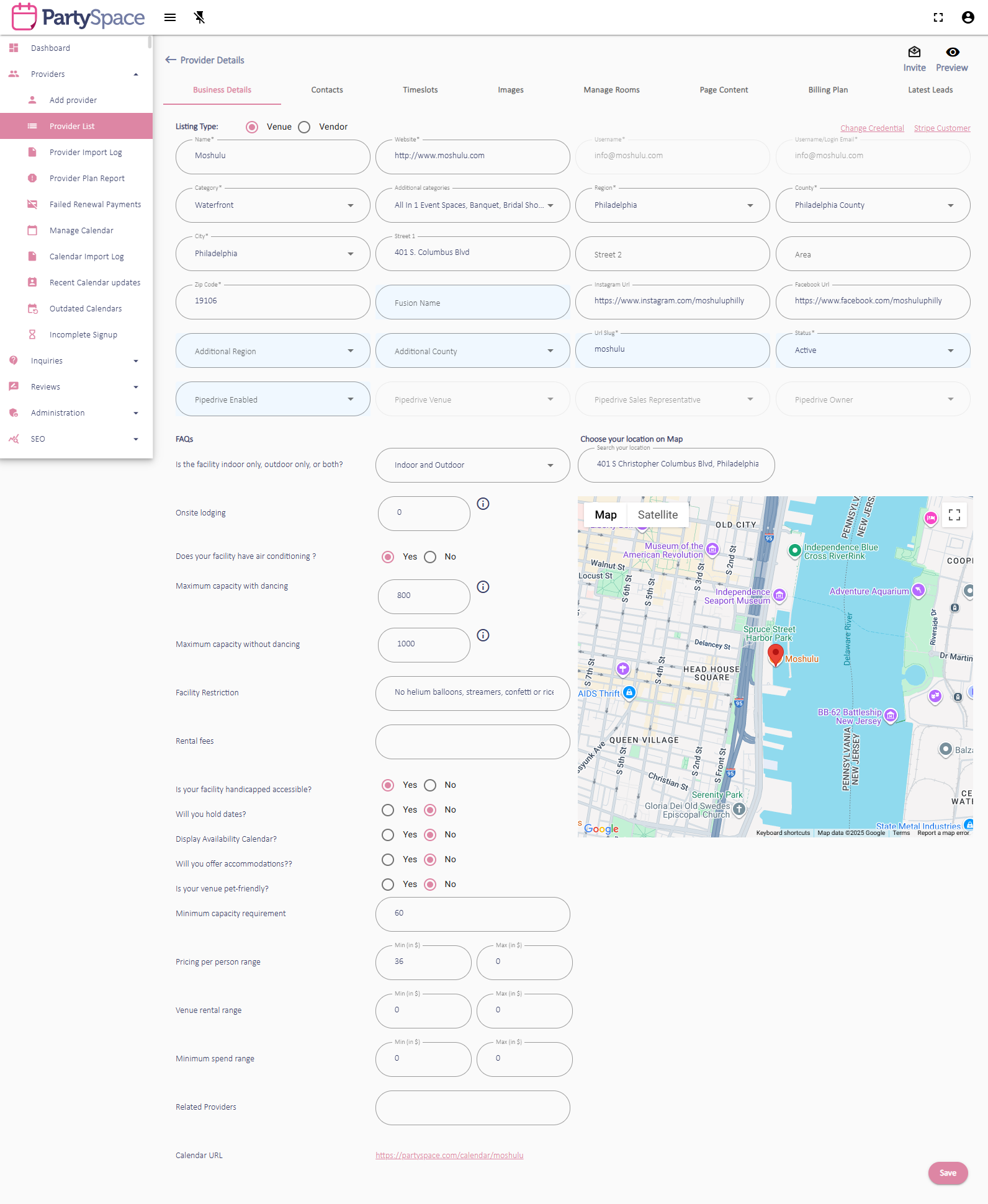
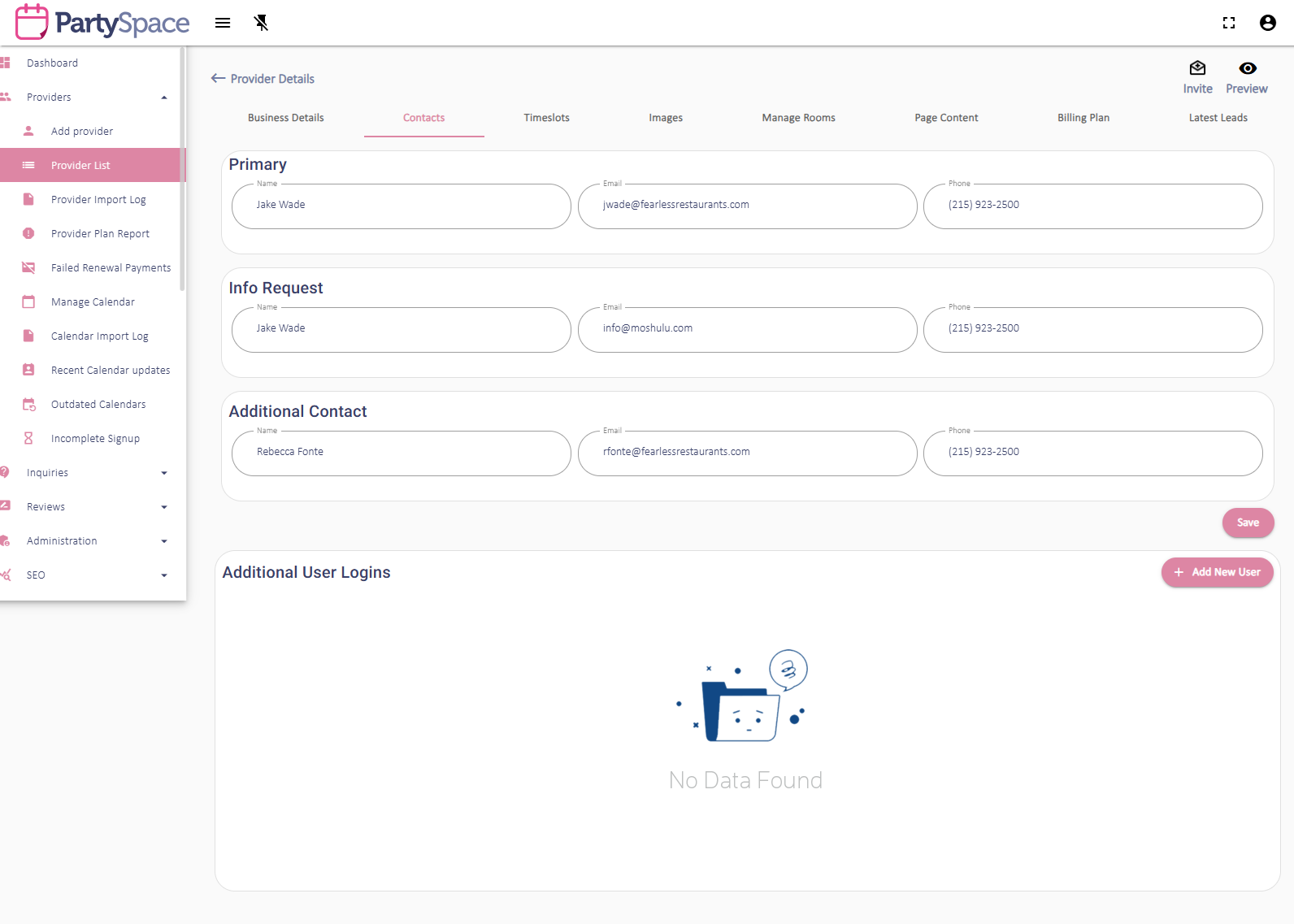
- Role‑based Admin & Venue CRM:
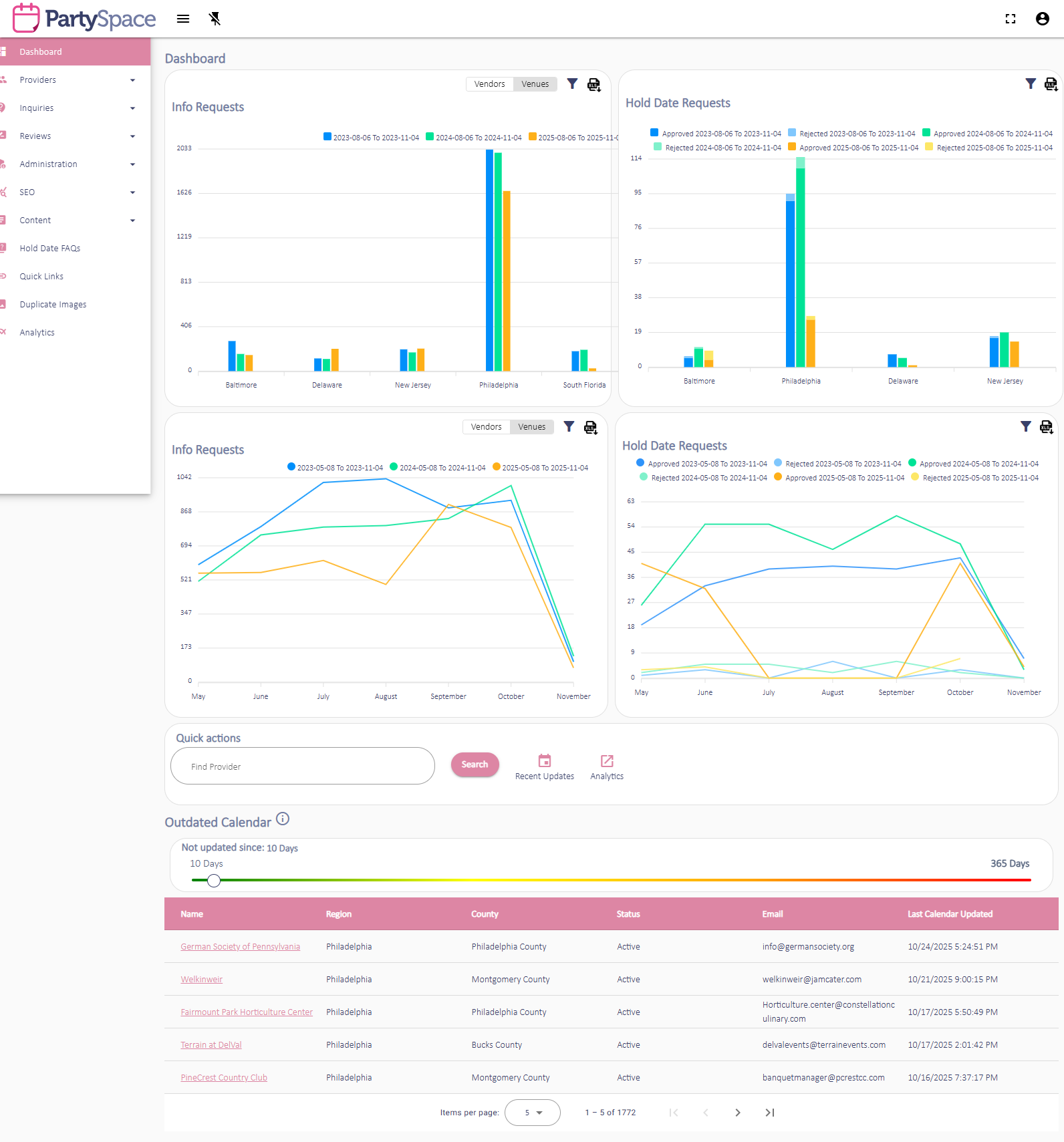
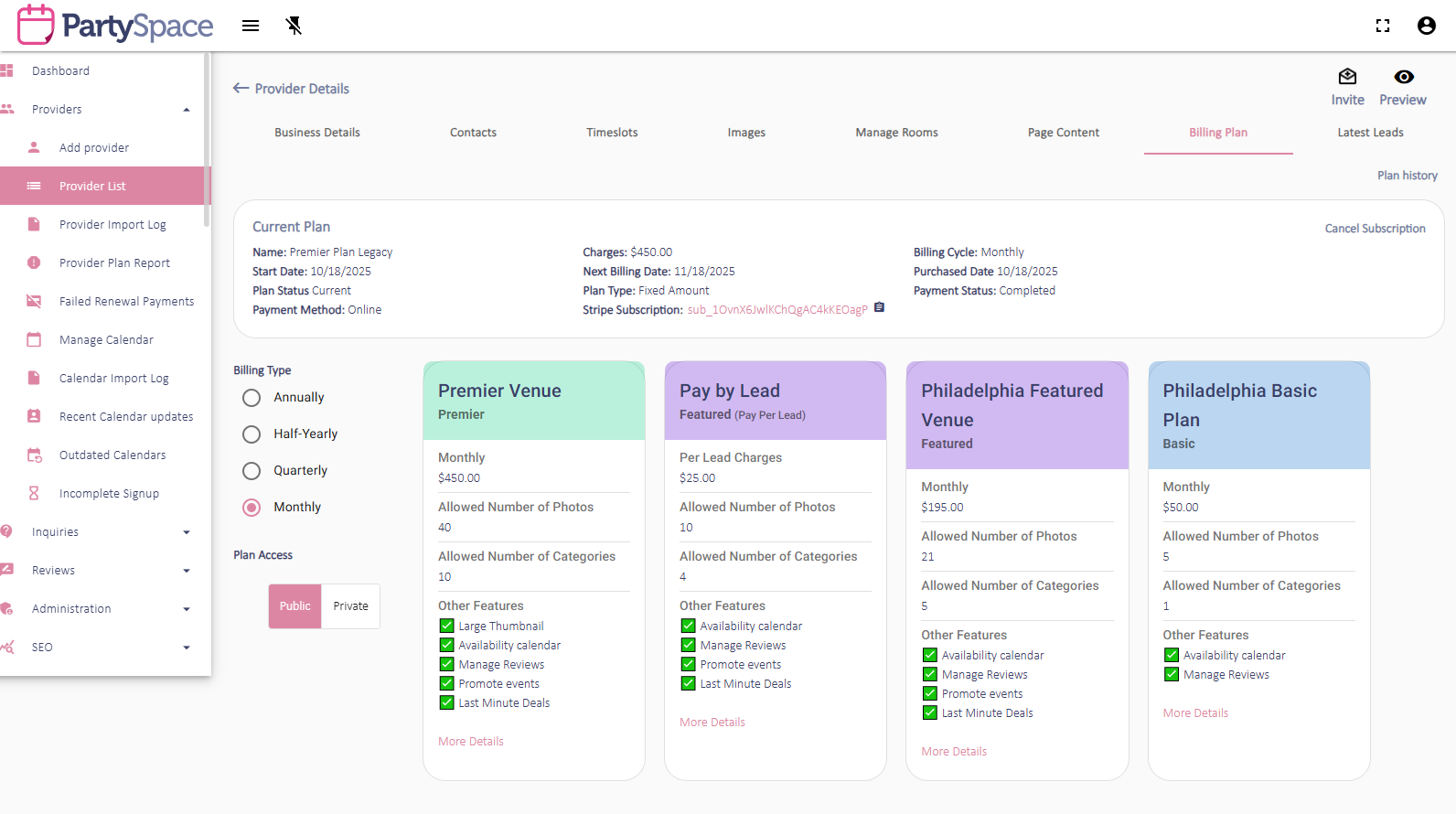
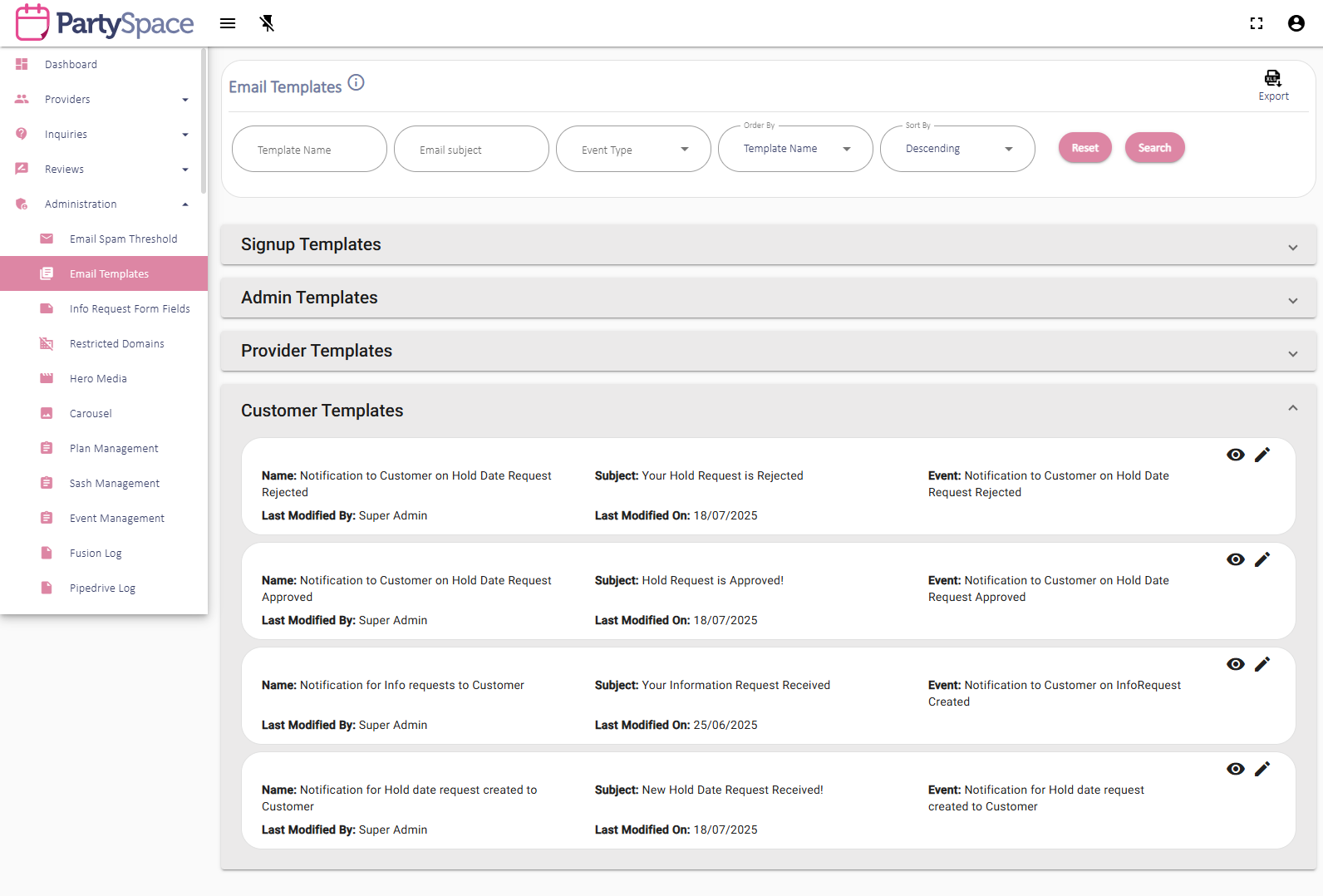
- PartySpace Admin: venue onboarding, plan management, payment plans , billing & payment gateway integration for automatic renewals , content CMS, SEO controls.
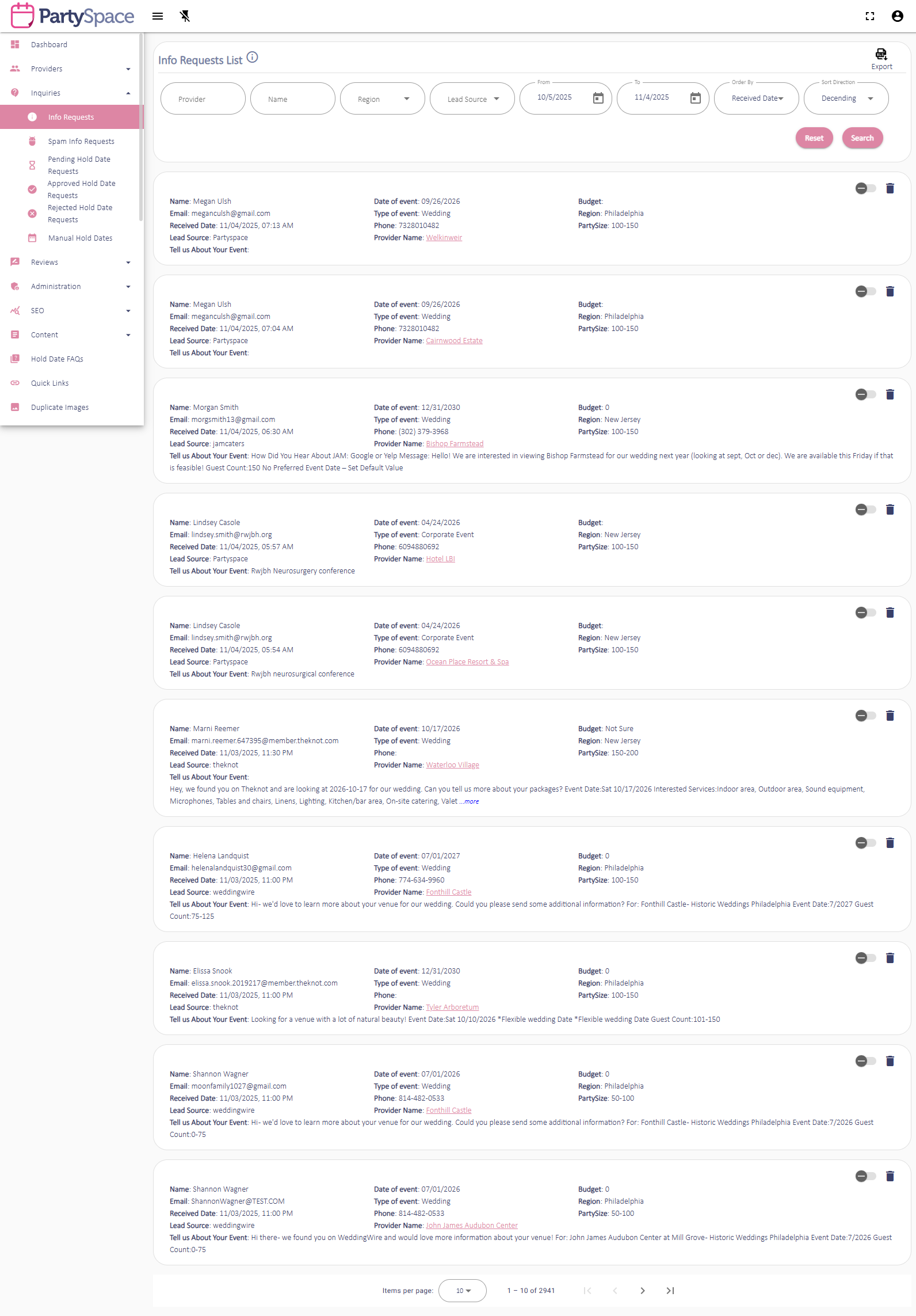
- Venue/Owner Portal: inquiry tracking, calendar management, hold requests, listing content updates.
- Observability & QA: error tracking, performance budgets, and automated tests to lower regression risk.
Data & Migration
- Zero‑downtime migration of listings, media, users, and historic URLs; redirect mapping to preserve SEO equity.
- Analytics instrumentation for funnel and cohort insights; hooks for experimentation and A/B tests.
Architecture at a Glance
Frontend: Angular withUniversal (SSR) and client hydration; accessible component library. Backend: API layer for listings, search, inquiries, accounts, billing; caching for high‑traffic endpoints.Data Access: Stored procedures + parameterized queries; ORM where appropriate; audit logging.Payments: Subscription plan management with payment gateway integration forrecurring billing .Storage: Relational DB for core entities; object storage for media; CDN‑ready image delivery pipeline.Security: RBAC, audit trails, input sanitization, rate limiting, CAPTCHA‑backed lead forms.Hosting: Cloud‑native on Azure (App Service, SQL, Blob/Files), with CI/CD automation.
Key Features
- Advanced search & filters (including available‑date filtering)
- Exclusive availability calendar +
Hold Date workflow - Venue/vendor onboarding & approval workflows
- Venue/owner CRM: inquiries, calendar, content editing
- Inquiry funnels with spam prevention and CRM handoff
- Admin console: onboarding, plans, automatic renewals, CMS, SEO controls
- Media pipeline (optimize, compress, lazy‑load)
- Programmatic SEO (schema, internal linking, canonical strategy)
- MIS & executive reporting for business health
- Analytics, events, and experimentation hooks
Before / After (Highlights)
Before: 10+ sec TTI on key pages; brittle templates; ad‑hoc SQL; manual media prep; limited admin capabilities.After: Fast, crawlable SSR pages; secure data access via stored procedures; automated media optimization; robust admin and venue CRM; streamlined editorial workflows.
Why Rheal
- Marketplace DNA: High‑intent discovery experiences with complex filtering and SEO requirements.
- Performance + SEO together: Designed for Core Web Vitals and crawler‑friendliness from day one.
- Pragmatic delivery: Incremental rollouts, strong QA, and change management to keep business online.
- Long‑term partnership: Ongoing improvements, new features, and data‑driven experiments.
Next Steps
- Provider self‑serve onboarding with guided quality checks.
- Expand structured data coverage (events, offers).
- A/B tests across search, filters, and lead/hold forms to maximize conversions.