Insurance
 Health Care
 Construction
 Financial Services
 Mobile
 Real Estate
 Project Management
 Introduction
Perigon life is an employee benefits program that offers opportunities to both the insurance companies and the organizations. Insurance companies load up their products on the portal. The organizations register with the platform and enroll their employees. After enrollment, the employees can view different products offered by insurance companies.
 Client Background
In 2020 a group of Canadian insurance industry leaders came together to discuss the need to simplify sourcing, purchasing, and management of Group Voluntary Benefits for employees, association members, and organizational stakeholders. Sharing decades of Canadian insurance industry experience, the perigon leadership team drew on their knowledge of organizations of all sizes, from coast to coast, to create a revolutionary and accessible voluntary benefits platform.
 Challenges
There were many Canadian insurance companies with lots of expertise in the market. However, the challenges they faced were acquiring a large customer base and maintaining them. The insurance products were targeted towards employees of an organization or members of an association. However, the consumers there did not have a complete picture of what options they had, and there were concerns about the stability of the insured policy in case an employee left an organization, or a member left an association. Many times, they needed to stick to one or two insurance options that the organization offered them. Also, there was less visibility on benefits/offers that they got out of the insurance products. There were lots of options in the insurance market; however, they were not tied up to all the companies, and many of the consumers missed the benefits that a few were having. In summary, there was an imbalance of the consumer base for insurance companies, and at the same time, there was a lack of availability of options that an organization could provide to their employees.
 Solutions
Rheal was chosen as their strategic technology partner as Rheal, being vastly experienced in providing innovative solutions in the insurance market, well understood the domain and could speak their language.
Insurance companies have different types of products that cater to different individuals and their family situations. Therefore, a common enrollment platform was a crucial need. The idea of a collaborative platform where the insurance company could put up their products and services, organizations and associations could enroll in a consumer benefits program and have a variety of options available to their employees to choose from. Rheal planned a collaborative effort between insurance companies and organizations to build a common employee benefit program that suited the needs of various individuals, stakeholders, and their family lifestyles. Also, a sales-boosting step of providing voluntary benefits to the employees upon enrollment, mutually benefitted the organizations and the employees in different ways. Employees achieved a good mental balance as they were insured along with their families. This made them more productive and creative. Organizations saw good relationships with their employees; they were able to recruit top candidates and had a good increase in retainees.
Following is the list of features that were developed to achieve the common digital platform for employee benefits.
Admin Portal:
This serves as the middle layer between the voluntary benefits platform and the insurance companies/employers, where the insurance companies add their products to the portal. The employers or consumer companies use this portal to enroll employees and see all the products on the platform, deciding which ones are applicable for their employees. Employees enroll via this admin portal and then log in to the employee benefits platform to start their journey.
Employee’s login:

Employer’s message:
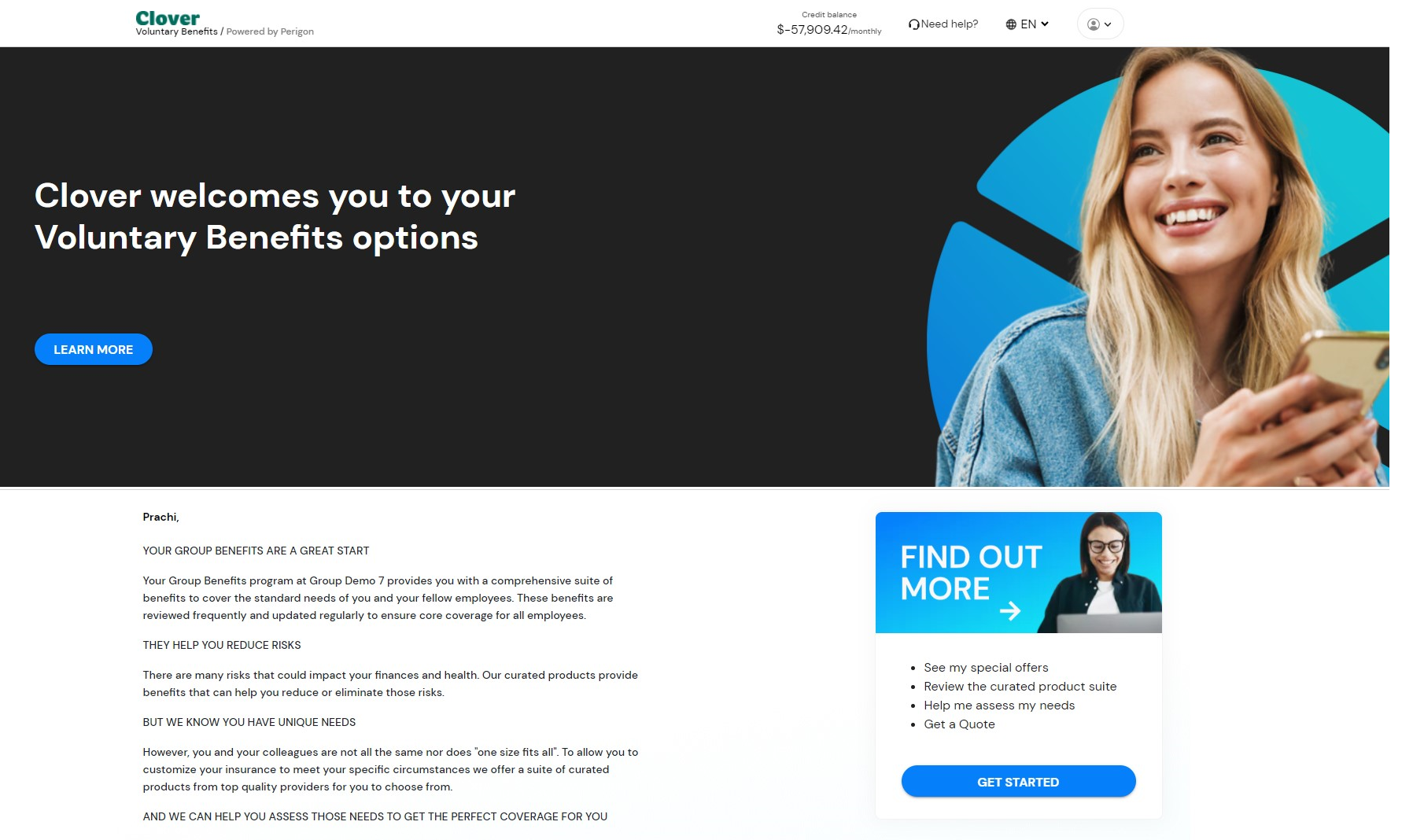
When employees log in to the platform, they see a welcome note displayed from the employer that describes what the employee benefits platform offers. It also gives them information on the voluntary benefits that the employee receives, and the different products curated for the employee.
Insurance Products offered:
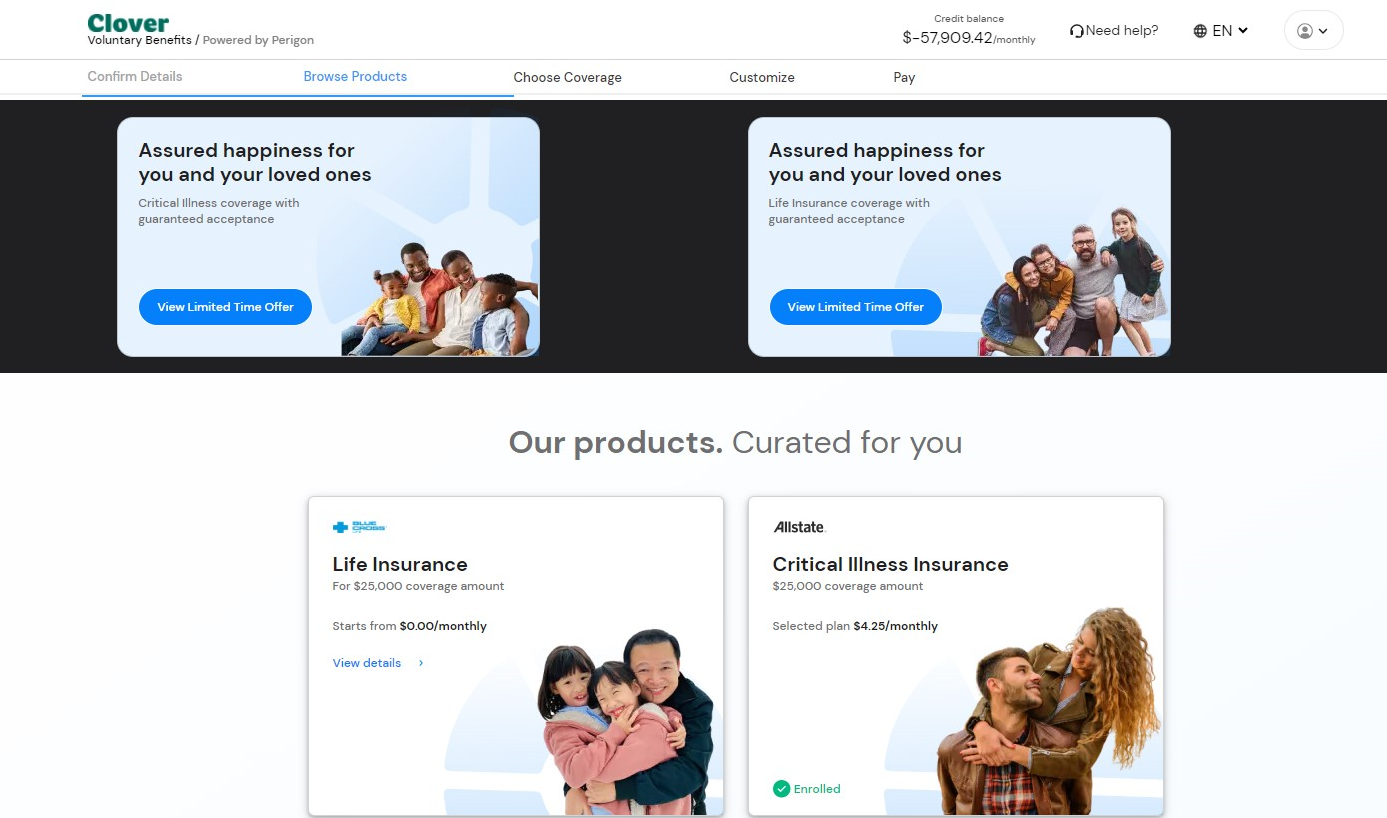
There are various types of insurance products provided by insurance companies such as critical illness insurance, life insurance, home warranty systems insurance, theft insurance, pet insurance, etc.
Life Insurance:
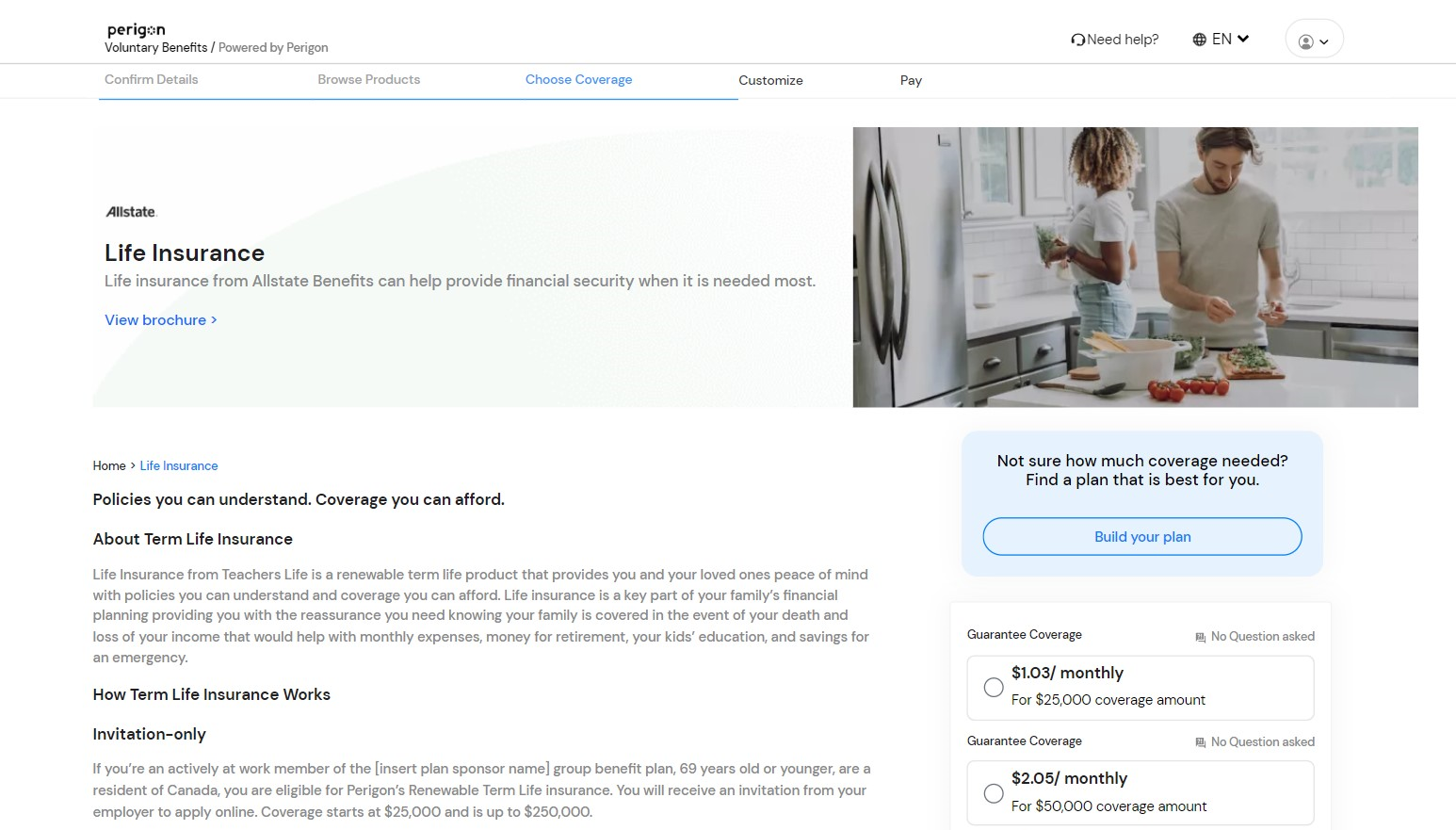
Life insurance products are the key products on the platform to secure employees at any stage of their life. Optional rider benefits are provided to the employees. In the event of an employee's death or reaching the maturity age, they receive a lump sum cash benefit.
Features and Benefits:
Guaranteed Approval within minutes.
Simple and Effortless.
Family-ready policies.
Stay protected until your 70th birthday.
Critical Illness Insurance:
Life insurance products ensure that the family of the employee receives cash benefits when the employee dies or reaches the maturity age. However, they do not cover the expenses when the employee is dealing with critical illness. Certainly, they do not cover the personal expenses that the employee must bear after recovering from critical illness, and they hit hard on the employee’s pocket. Most of the critical illnesses covered are cancer, heart failure, brain stroke, end-stage renal failure, major organ failure, and many more.
Features and Benefits:
Configurable plan designs.
Annual wellness benefit.
Coverage available for spouse and children.
Benefits spend directly to the covered person.
Continuation of coverage if premiums are paid.
Special support for insured diagnosed with Cancer / Parkinson’s.

Beneficiaries and Dependents:
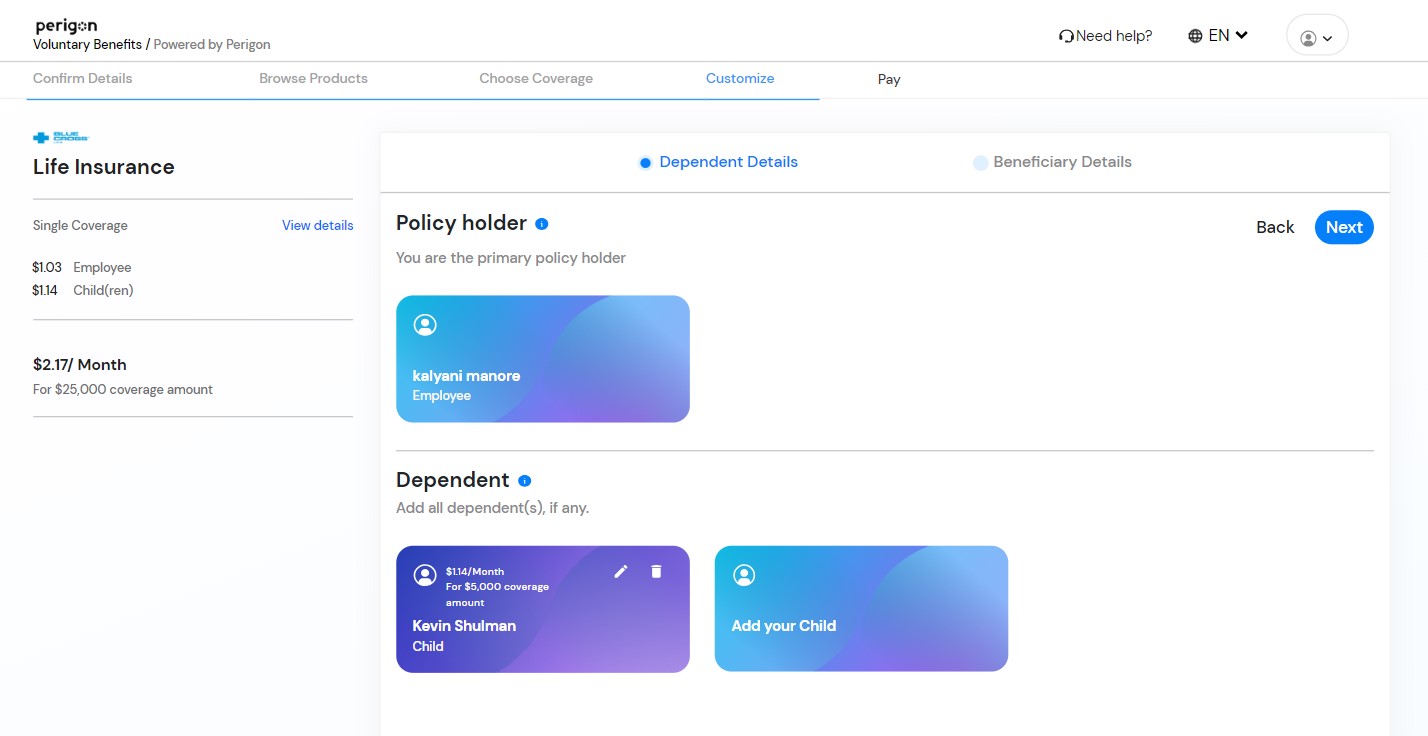
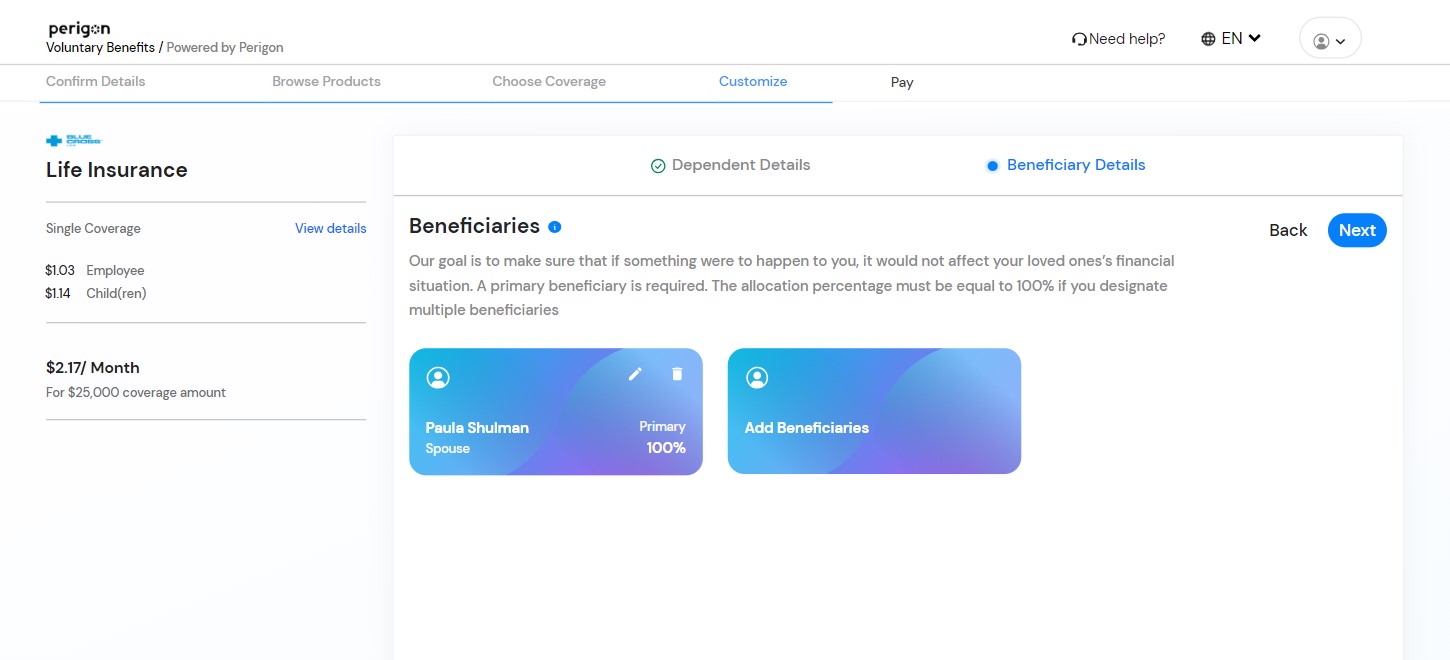
The employee can nominate a beneficiary to claim benefits in the event of their death or upon reaching maturity age. When in the life insurance product, an employee can add spouse and/or children as dependents. In doing so, the employee confirms their willingness to pay an additional premium, ensuring that the spouse and/or children are also insured.
Product added to a cart:
Payments:
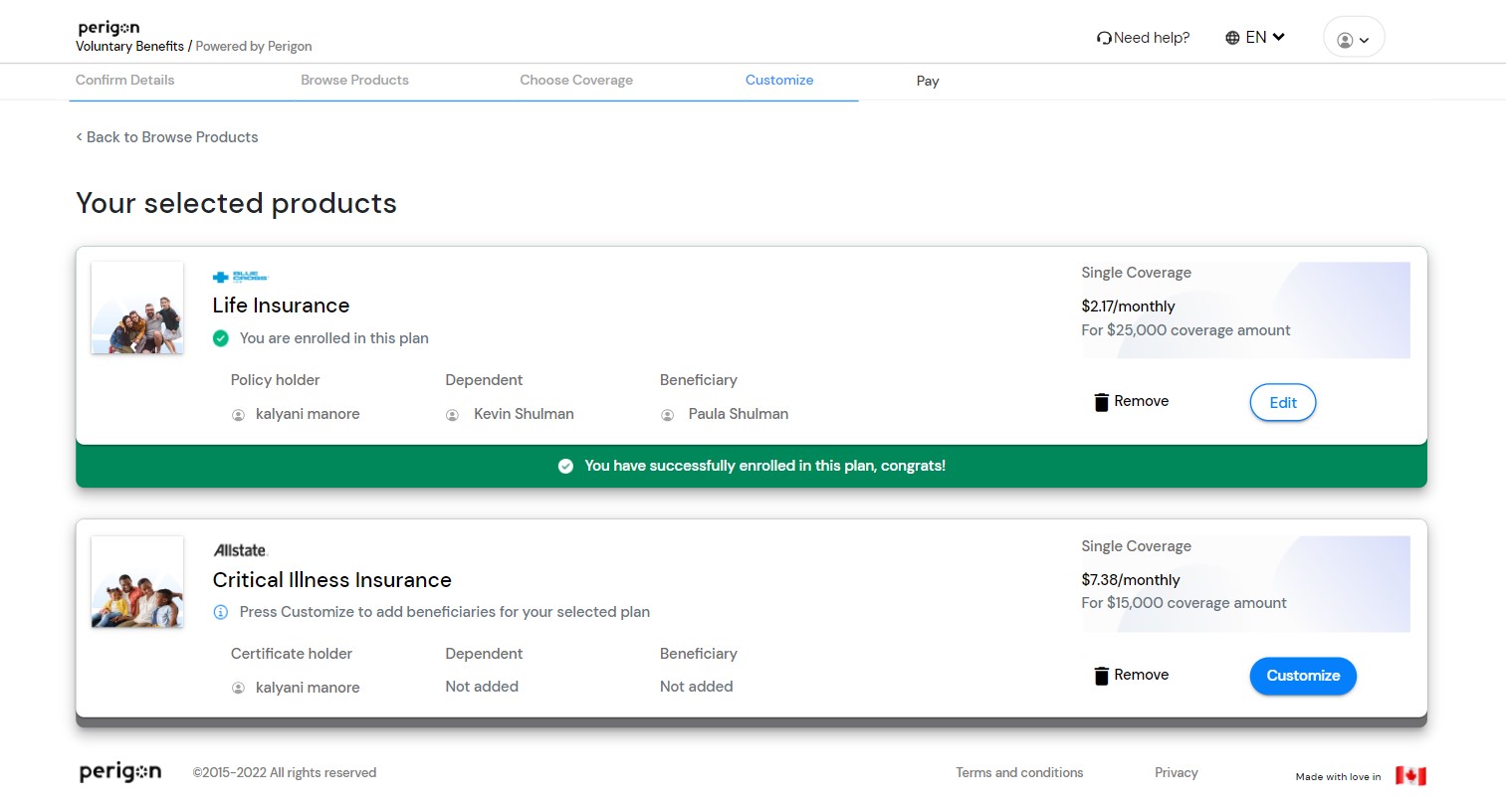
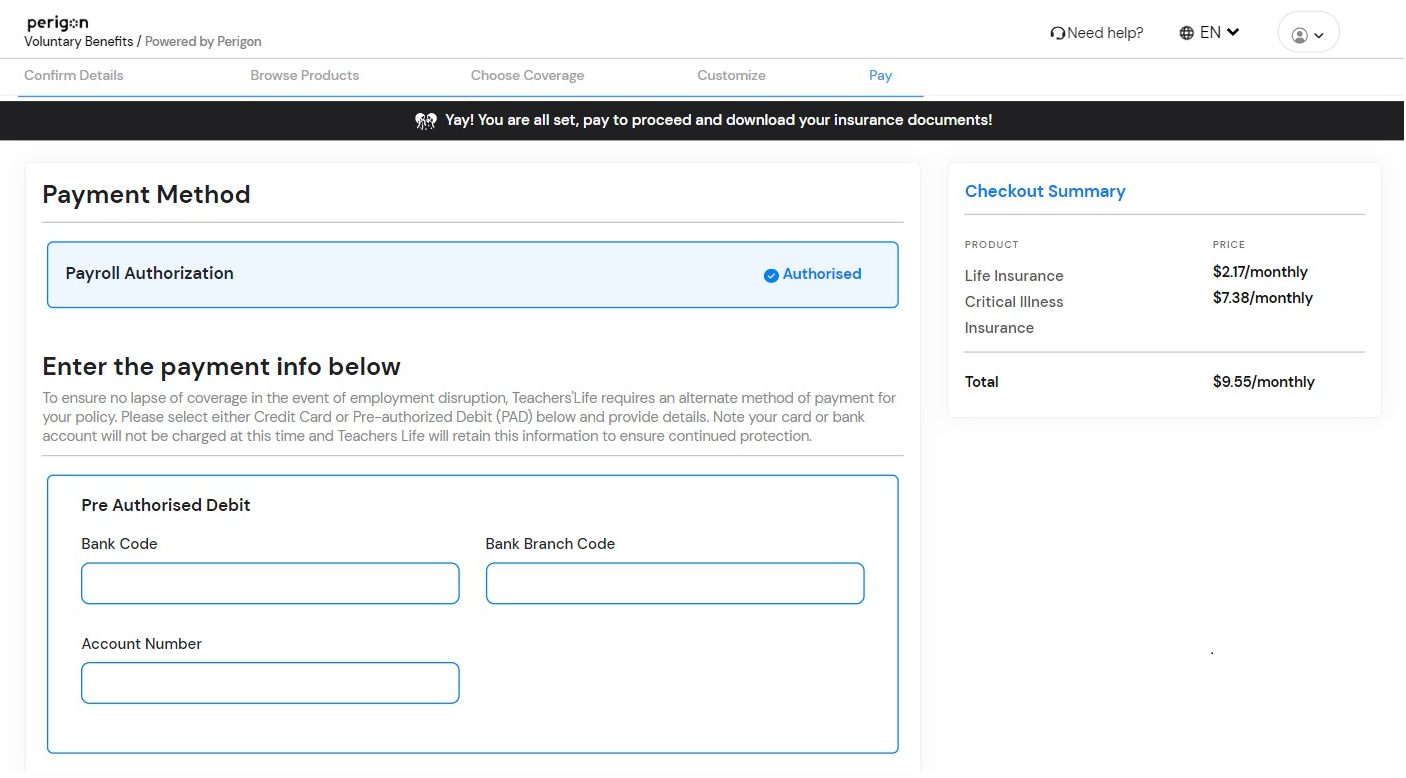
To make payments for the insurance products purchased, an employee utilizes the voluntary credits given to them when buying an insurance product. Once the voluntary credit limit is reached, the employer offering the employee benefits program can choose to deduct insurance premiums directly from the employee's payroll. To enable this deduction, employees must authorize their employers during the checkout process on the payment page.
Payment confirmation:
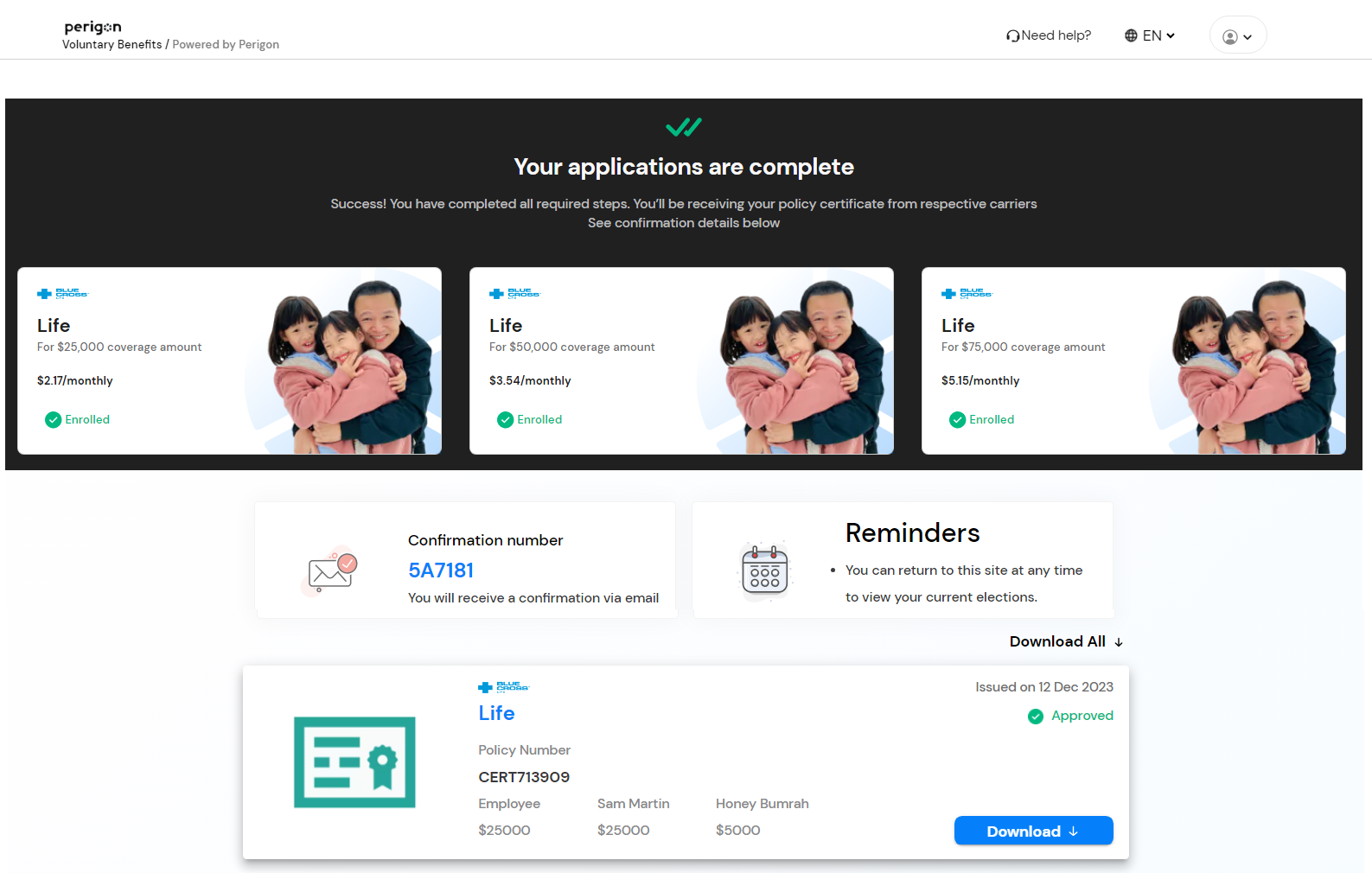
After the payment process is set, the next step is the confirmation of this process for the employee. A policy number is generated for the employee, and a policy document is formed containing all the relevant information regarding the policy, the customization that the employee has done, dependents' information, and beneficiary information. Employees download their policies from the platform.
 The Result
Rheal helped the client to build a robust, scalable, and innovative platform to provide opportunities for multiple consumers and helped achieve client its end goal. We have automated a myriad of processes and simplified the complex workflow thereby eliminating all the manual or redundant data entry work. As a result, the client has been able to widen his customer base while at the same time decreasing their costs.